 Verified
Dr. Elena, 37
General NeurologyBoston, MA
94%
Compatibility
A neurologist is the physician who specializes in diagnosing and treating disorders of the brain, spinal cord, and nerves - conditions that can affect almost every part of the body. The women who choose this specialty have spent over a decade learning how the most complex organ in the human body actually works. They tend to be the most intellectually generous partners on the network: curious about everything, patient with ambiguity, and refreshingly direct about what they think. This is doctor singles dating with depth on both sides of the conversation.

A neurologist is a physician who specializes in diagnosing and treating disorders of the brain, spinal cord, and nerves. Neurological conditions can affect almost every part of the body and span both adult and pediatric medicine. A neurologist knows the anatomy, function, and full range of conditions that affect the nerves and nervous system. In practice, that means a woman who has spent her career learning how thought, movement, sensation, sleep, and memory actually work - and how they break.
The training pipeline behind that expertise is one of the longest in American medicine. To become a neurologist, a physician completes four years of college, four years of medical school, one year of internship covering neurology and other fields, three years of neurology residency, and up to three additional years of subspecialty fellowship. The shortest realistic path is twelve years of post-secondary education. The longest is fifteen. Every woman you meet on this page chose that road deliberately - and finished it.
Neurology selects for women who can sit with hard problems and not flinch. That same quality changes what a relationship feels like from the inside.- Dr. Elena S., Neurology, Member Since 2025
What that decade-plus of training produces is a particular kind of intellectual temperament. Neurologists are diagnosticians first. The specialty rewards careful history-taking, methodical physical examination, and the ability to hold a dozen competing hypotheses in mind while gathering one more piece of evidence. There is rarely a quick fix. There is almost always a longer view. Partners frequently describe the same trait at home: she listens more than she interrupts, asks better questions than most, and is genuinely interested in your answers - including the complicated ones.
Neurology is a cognitive specialty. It rewards reading, pattern recognition, and intellectual patience. The women who thrive in it tend to be the same women who make remarkable long-term partners - curious, calm, and unimpressed by surface charm. If you value being out-thought as often as you out-think, this is the specialty to filter for.
Neurology runs across three predictable settings: outpatient clinic, hospital consults, and procedure days for EEG and EMG. Subspecialty changes the rhythm more than any other variable. Here is what the week tends to look like and how it shapes dating.
General neurologists in outpatient practice run Monday-through-Friday clinic schedules - typically 8 AM to 5 PM with notes wrapping by 6:30. Subspecialties like headache medicine, sleep medicine, and movement disorders skew heavily outpatient, which means dinners, weeknight events, and weekend travel are realistic by default.
Clinical neurophysiologists block dedicated procedure days for EEG, EMG, and nerve conduction studies. These days are tightly scheduled, finish on time, and rarely run over. Members report procedure days as the easiest weekday dates to plan - she leaves on time, every time.
Vascular neurology - the stroke subspecialty - runs the most demanding call. Tele-stroke and in-house coverage compress decision windows into minutes. Expect a partner with intense on-call weeks balanced by genuinely free off-call weeks. Plan trips around the rotation, not against it.
Academic and hospital-employed neurologists rotate one to two weeks per month on inpatient consults. Consult weeks run long; non-consult weeks return to outpatient predictability. The rhythm is monthly, which makes long-term planning - vacations, family events, weekend trips - straightforward.
Pediatric neurology blends developmental clinic, epilepsy monitoring, and family-centered care. The hours are humane, the emotional weight is real, and the women who choose it tend to be exceptionally warm communicators. A strong fit if family-oriented values are central to what you are looking for.
Headache, sleep, neuro-oncology, behavioral neurology, neuromuscular medicine, pain medicine - twelve recognized subspecialties, each with a different week. Filter by subspecialty if schedule predictability is your top priority. The right subspecialty is the difference between two free weeknights and five.
Neurology recognizes a dozen formal subspecialties, each with its own schedule signature. Knowing which one a profile lists tells you more about her week than her zip code does.
| Subspecialty | Primary Setting | Dating Rhythm |
|---|---|---|
| Headache Medicine | Outpatient clinic | Highly predictable, evenings free |
| Sleep Medicine | Clinic & sleep lab | Predictable, occasional study nights |
| Epilepsy | EMU & outpatient | Stable, light call rotation |
| Clinical Neurophysiology | Procedure days | Tightly timed, on-time finishes |
| Vascular Neurology (Stroke) | ED & inpatient | Intense on-call, free off-call |
| Neuro-Oncology | Cancer center | Stable weekdays, emotionally weighty |
| Movement Disorders | Outpatient clinic | Five evenings most weeks |
| Child Neurology | Pediatric clinic | Family-friendly hours |
| Pain Medicine | Clinic & procedures | Predictable, no overnight call |
| Neuromuscular Medicine | Clinic & EMG lab | Predictable, weekend-friendly |
| Brain Injury Medicine | Rehab & consults | Steady weekdays |
| Neurodevelopmental Disabilities | Pediatric clinic | Family-friendly hours |
The bottom line: a stroke neurologist and a headache neurologist do not lead the same week. Read the subspecialty field carefully and the schedule conversation gets dramatically easier. For a deeper look at how physicians plan around these rhythms, see our guide to understanding physician schedules and dating.
Neurologists treat conditions that range from Alzheimer's disease and ALS to migraine, epilepsy, multiple sclerosis, Parkinson's disease, stroke, brain tumors, and peripheral neuropathy. That clinical breadth shapes the way she thinks, listens, and partners. Here is where compatibility lands.
Neurologists spend their days reasoning from history and exam to diagnosis. They are trained to think slowly, weigh evidence, and resist premature closure. Expect a woman who actually considers what you say before she responds - and whose responses tend to be worth waiting for. Conversations go three layers deep instead of staying on the surface.
The conditions she manages - multiple sclerosis, Parkinson's, epilepsy, dementia, neuropathy - sit at the frontier of what medicine actually understands. Neurologists are professionally formed by being comfortable at the edge of knowledge. That curiosity carries home: she will read the book you recommended, listen to the podcast you mentioned, and probably ask better follow-up questions than you expected.
Many neurological conditions are chronic. Treatment is measured in years, not weeks. That trains a long-view temperament - patience with slow improvement, comfort with incremental progress, and a settled relationship to time. Partners describe this as the opposite of impulsive: she plans, she follows through, and she does not need quick wins to stay engaged.
Neurologists deliver difficult news regularly - a diagnosis of ALS, an early dementia, a stroke with lasting deficits. Doing that well requires emotional regulation and a capacity to be present without flinching. That same capacity shows up in relationships when the conversation gets serious. She does not look away, does not change the subject, and does not need you to perform optimism.
Neurologists read constantly - clinical journals, yes, but also philosophy of mind, neuroscience trade books, biographies, fiction. The brain is her professional object and her cultural fascination. Bring book recommendations, podcast discoveries, and a working interest in ideas, and the conversation never gets thin.
Twelve years of training and a daily caseload of complex diagnoses produce a particular kind of self-possession. It is not flashy. It is not performative. It is the steady confidence of someone who has been tested repeatedly and knows what she actually thinks. Partners who match that register - confident without needing to prove it - do exceptionally well here.
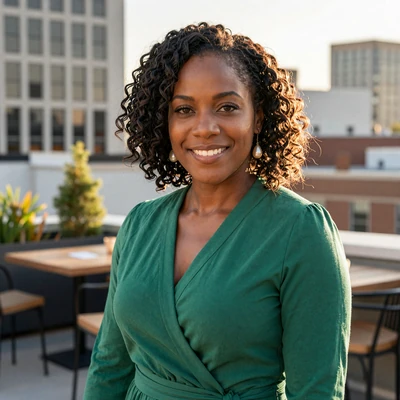
A small selection of NPI-verified women neurologists currently active on Doctor Singles Network. Compatibility scores reflect schedule alignment, relationship intent, and lifestyle fit with the average member viewing this page.
Verified
Boston, MA
 Verified
New York, NY
 Verified
Houston, TX
 Verified
San Francisco, CA
 Verified
Atlanta, GA
 Verified
Seattle, WA
Dating intelligent women is rarely about matching IQ. It is about matching the way she engages with ideas, decisions, and time. Neurologists run a particular operating system, and three principles consistently separate the relationships that deepen from the ones that plateau.
The fastest way to lose a neurologist's attention is to perform interest you do not actually have. The fastest way to earn it is to be genuinely curious about something - anything - and to bring real questions instead of conclusions. She does not need you to know neuroscience. She needs you to have a working intellectual life of your own. The men who succeed here read, listen, travel with attention, and have opinions they are willing to update.
Neurologists are diagnosticians. They think in iterations, not punchlines. A first date that runs three hours is not unusual. A weekend conversation that revisits the same topic across two days is normal. Plan for time, not for compression. The relationship deepens through repeated long conversations, not through clever one-liners. Choose the quiet wine bar over the loud restaurant, the morning hike over the rushed brunch.
Most neurologists protect daily reading time the way an athlete protects training time. Journals, books, podcasts, longform - this is not a hobby for her, it is professional infrastructure. Partners who treat that time as sacred, rather than as competition for attention, get a partner who is fully present when she is present. Partners who interrupt it tend not to last.
The bottom line: dating a neurologist rewards intellectual seriousness and patience with depth. If you have built a thoughtful life of your own - a real career, real interests, real opinions - this is one of the most satisfying specialties on the network to match into. For broader context, see the Doctors Dating hub or read our blog on career compatibility in medical relationships.
Doctor Singles Network covers 22 doctor specialties on the Doctors Dating hub. If the analytical, intellectually generous DNA of neurology appeals, these adjacent specialties share much of the same temperament.
Psychiatrists share the depth, patience, and emotional intelligence of neurology - a natural adjacent match.
Internists share the diagnostic mindset and outpatient rhythm - analytical, methodical, schedule-predictable.
Radiologists overlap with neurology on neuroimaging and share the pattern-recognition cognitive style.
Endocrinologists share the precision-medicine, evidence-driven mindset and humane outpatient schedules.
Oncologists share the long-view, emotionally steady approach to chronic and serious conditions.
Ophthalmologists share precision, technical depth, and predictable clinical schedules.
Anesthesiologists share the calm, analytical, pharmacology-fluent temperament neurologists value.
Browse the full Doctors Dating hub and pick the specialty that fits your life best.