 Verified
Dr. Helena, 35
Adult PsychiatryBoston, MA
96%
Compatibility
Dating a physician trained to listen for what is not being said is a different experience from dating anyone else. A psychiatrist spends her career building maps of human attachment, conflict, and recovery - and she does it forty-five minutes at a time, five patients a day, for ten years. That kind of practice does not stay in the office. It shapes how she communicates over coffee, how she handles a first argument, and how she builds a relationship she actually intends to keep.
A psychiatrist is a fully trained physician - MD or DO - who completes four years of psychiatric residency on top of medical school. She prescribes medication, diagnoses neurobiological illness, and conducts long-arc psychotherapy. Her clinical day is built around forty-five-minute sessions and ninety-minute intakes, with notes written between patients and a panel of forty to eighty people she sees on a recurring basis. The work is intellectually dense, emotionally heavy, and structured almost entirely by the calendar.
The emotional load is real and worth naming early. Psychiatrists carry secondary stress from sitting with trauma, suicidality, and severe illness - and the American Medical Association's 2024 burnout data places mental-health specialties among the higher-burnout fields, though notably lower than emergency medicine or surgery. What that means in practice is that the women who stay in psychiatry have actively built coping systems: therapy of their own, hard limits on caseload, protected weekends, and a strong instinct for who they let into their personal life. After 12 hours of holding space for other people, small talk sounds unbearable. Switching from doctor mode to date mode is harder than it looks - and the women who do it well are the ones who have already done the work on themselves.
My patients get the clinical version of me. The person I date gets the actual one. I had to learn the difference - and now I look for someone who values it.- Dr. Helena P., Adult Psychiatry, Member Since 2024
What you'll meet on this page are women who chose a specialty that pays well, runs predictably, and demands daily emotional precision. They tend to be thoughtful conversationalists, slow to judge, and quick to notice when something is off. They also tend to be direct - psychiatrists do not, as a rule, play games. They have spent a career watching avoidance and miscommunication damage relationships in the consulting room. They are unlikely to repeat the pattern in their own.
Median total compensation for psychiatrists in 2025 sat near $310K (MGMA), with outpatient and telepsychiatry roles offering some of the most flexible schedules in medicine. Light call burden, no overnight pager for most subspecialties, and clearly bounded clinic hours make psychiatry one of the more dating-compatible specialties in physician medicine.
Psychiatry runs on a calendar, not a pager. Sessions are booked weeks in advance, the day ends when the day ends, and outpatient practice routinely outperforms most physician specialties on schedule predictability - which is why so many psychiatrists make and keep their dating commitments.
Most psychiatrists work scheduled patient blocks - typically 8 AM to 5 PM, four to five days a week. Sessions are 45 or 90 minutes, booked in advance, and rarely overrun. The calendar on Monday morning is the calendar that actually runs Friday afternoon. Weeknight dinner plans hold.
A growing share of psychiatry - APA data puts telepsychiatry adoption near 60% of outpatient practice in 2025 - runs over video. That means a home office, a flexible mid-day window, and the option to relocate without changing employers. Couples who travel together benefit directly.
Outpatient psychiatrists generally cover phone call only - no overnight hospital presence. Inpatient and consult-liaison roles carry more weight, typically one weekend in four to six. Filter by practice setting if call-free evenings are non-negotiable for you.
Psychiatrists are trained to end a session on the minute. That discipline transfers. When she says she is off at 5:30, she is off at 5:30. The work does not follow her home in the form of three-hour chart catch-up evenings the way it does in other specialties.
Because sessions are recurring, vacations are planned months ahead and patients are notified at the start of treatment. Summer (July-August) and the December holiday window are standard blackout periods - which means actual two-week trips happen, not just long weekends.
A large share of outpatient psychiatrists protect Friday afternoons for administrative work or simply close early. That creates real Friday-evening windows - date nights, weekend departures, late dinners that do not start at 9 PM. Among physician specialties, this rhythm is rare and worth knowing about.
Here is how a working week tends to read for a mid-career outpatient psychiatrist in private or group practice - the most common setting in the United States.
| Day | Clinical Time | Realistic Date Window |
|---|---|---|
| Monday | 8 AM - 5 PM clinic | Dinner after 6 PM |
| Tuesday | 9 AM - 6 PM clinic | Late dinner, drinks |
| Wednesday | 8 AM - 5 PM clinic | Evening event, gym, dinner |
| Thursday | 9 AM - 6 PM clinic | Dinner, weeknight plans |
| Friday | 8 AM - 1 PM clinic (half-day) | Early dinner, weekend departure |
| Saturday | Off (phone call rotation possible) | Full day available |
| Sunday | Off | Full day available |
Why does this matter? Because the bottleneck in dating a physician is almost always the schedule. Psychiatry removes most of it. There is no operating room overrun, no admitted patient list, no morning rounds. If you want a partner who is fully credentialed as a doctor but actually present on a Tuesday evening, this is the specialty to filter for.
The skills psychiatry sharpens - close listening, calibrated honesty, conflict literacy - map almost one-to-one onto what makes a long-term partnership work. Here is where compatibility tends to land for the men who match well with psychiatrists.
A trained psychiatrist holds empathy and boundaries in the same hand. She will take your bad week seriously, ask better questions than your friends, and resist the urge to fix you. That balance - present but not enmeshed - is what makes the relationship feel safe without feeling sticky.
She has spent a decade learning that vague language causes harm and specific language repairs it. Expect questions like "what did you mean by that?" instead of silent stewing. Expect repair attempts after conflict. Expect a partner who treats communication as something you practice, not something you either have or do not.
Psychiatry is one of the few physician specialties where the term means what it says. Sessions end, charts close, evenings belong to her. The partners who pair best are men who also protect their own off-hours - finance professionals who leave the BlackBerry at the office, founders past the 80-hour phase, lawyers off the partnership clock.
Dating intelligent women is the through-line of this site, and psychiatrists are at the deep end of the pool. Conversation routinely includes neuroscience, philosophy, attachment theory, and a fair amount of cultural literature. Bring something to the table - a curiosity, a discipline, an opinion supported by reading - and you will not run out of conversation.
She watches avoidant patterns destroy relationships in her office every week. She is not going to repeat them in hers. Mixed signals, slow fades, and ambiguity about intent land badly. Clear interest, specific plans, and direct honesty land well. The bottom line: bring your actual self, on time.
Psychiatrists do their own therapy. Most have spent years doing it. What that produces is a partner with unusual self-awareness about her patterns, her triggers, and her family system - and no interest in performing perfection. Expect honesty about hard things. Expect to be asked the same in return.
A small selection of NPI-verified women psychiatrists currently active on Doctor Singles Network. Compatibility scores reflect schedule alignment, relationship intent, and lifestyle fit with the average member viewing this page.
Verified
Boston, MA
 Verified
Seattle, WA
 Verified
Denver, CO
 Verified
New York, NY
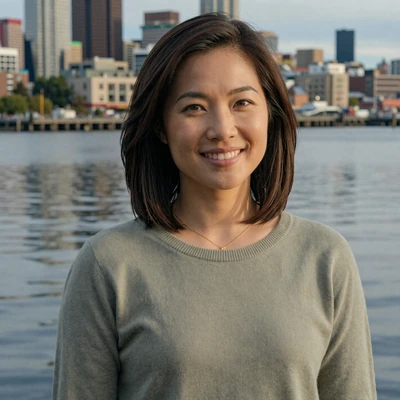 Verified
Austin, TX
 Verified
San Francisco, CA
Physician dating works best when you understand the specialty's emotional weather. Psychiatrists carry a particular kind of fatigue - not from physical hours but from sustained attention - and they have built specific defenses to keep their personal lives intact. Three principles consistently separate the relationships that deepen from the ones that stall.
The single most common mistake is treating her like your therapist. She has been listening for nine hours. The relief she is looking for at 6 PM is mutual conversation, not another patient. Talk about your day, ask about hers, share opinions, argue about a film. The minute the dynamic tips into one-way emotional unloading, the relationship loses oxygen. Bring your interior life, but bring it in dialogue.
A psychiatrist watches people for a living. If she gently flags a pattern - that you minimize your father, that you sleep poorly before depositions, that you avoid one specific friend - she is almost certainly right. Defensiveness is the wrong response. Curiosity is the right one. The men who do best in these relationships treat her observational skill as a feature, not a threat, and let themselves be seen.
Most psychiatrists need a transition window between work and home - a walk, twenty minutes of silence, a quick workout. It is not avoidance. It is the same hygiene a trader uses after a market close. Members who learn the ritual and stay out of it during the wind-down report the strongest long-term relationships. The reward, on the other side of that window, is genuine presence.
The bottom line: dating a psychiatrist rewards directness, self-awareness, and respect for her professional decompression. Read more on how physician schedules shape modern relationships, or browse verified couple success stories - including several psychiatrist matches - to see how these partnerships actually take shape.
If the thoughtful, schedule-friendly rhythm of psychiatry resonates with you, these neighboring specialties on the Doctors Dating hub share much of the same temperament and lifestyle compatibility.
Neurologists share the brain-science depth and analytical orientation of psychiatrists with comparable schedules.
Family physicians share outpatient hours and continuity-of-care values - a strong adjacent match.
Internal medicine pairs intellectual depth with predominantly clinic-based hours and shared diagnostic mindset.
Pediatricians share the high-empathy, family-oriented values that many psychiatrists bring to partnership.
Endocrinologists match the precision-thinking and outpatient rhythm psychiatrists typically gravitate toward.
Dermatologists share the lifestyle-friendly outpatient schedule and refined urban orientation.
Psychiatric nurse practitioners share the same clinical world and outpatient rhythm - a natural adjacent match.
Browse the full Doctors Dating hub and pick the specialty that fits your life best.